
Why Realistic Fiction? Because it’s the genre that brings you stories so ordinary, you could be living them (except maybe with wittier dialogue and slightly better lighting). But like reality TV, reading about real life might not be as dull as you think it is.
In our year-long Bookworm Challenge, September is the month for realistic fiction. If you’re scratching your head about the genre, we’re here to help. While the challenge prompts may give you room to squeak through with another type of read, we encourage you to give it a try.
Why You Might Like Realistic Fiction
These books provide a mirror to everyday, human experiences; offering comfort, validation, or a new way of looking at a familiar situation. We navigate emotional journeys alongside characters that feel like real people. Realistic fiction is compelling because it allows us to see ourselves and our lives within the pages of a book. Spoiler alert: this genre can be both uplifting and challenging to read. These books often tackle complex social issues, personal challenges, and moral dilemmas, highlighting the extraordinary moments hidden within everyday life.
To get you started on your September stroll, here are some titles and authors to consider, for early readers on up.
Our Recommendations
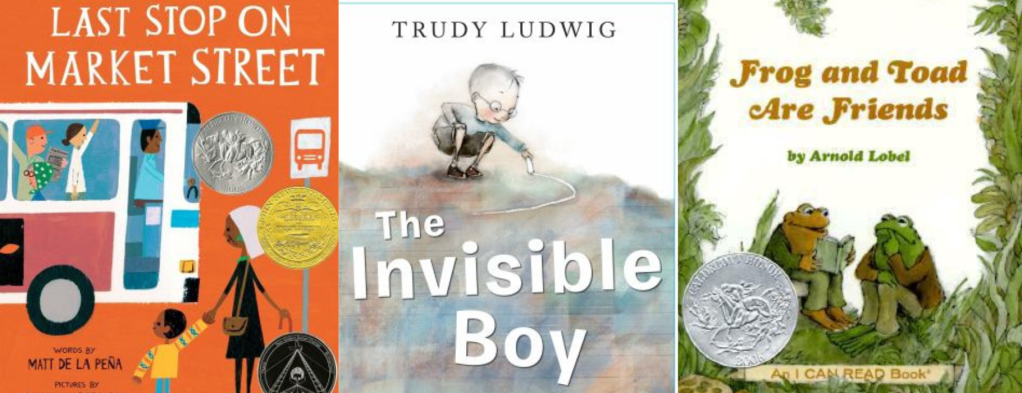
Last Stop on Market Street by Matt de la Peña, illustrated by Christian Robinson
This award-winning picture book follows a young boy named CJ and his grandmother as they ride the bus through their city. Along the way, CJ learns to see the beauty in everyday moments and the value of community, kindness, and perspective.
The Invisible Boy by Trudy Ludwig, illustrated by Patrice Barton
A touching story about a quiet boy named Brian who feels invisible in his classroom until a new student arrives and begins to notice him. The book explores themes of friendship, empathy, and the importance of including others.
Frog and Toad Are Friends by Arnold Lobel
A classic collection of stories about two friends, Frog and Toad, who navigate everyday adventures and mishaps together. The stories are simple, humorous, and filled with themes of friendship, understanding, and acceptance.
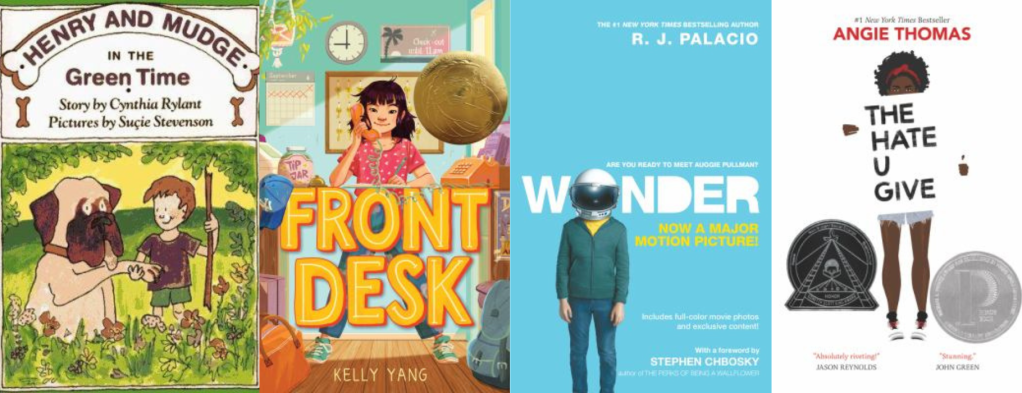
Henry and Mudge Series by Cynthia Rylant, illustrated by Sucie Stevenson
A book series about a young boy named Henry and his big, lovable dog, Mudge. These stories highlight the joys and challenges of childhood, emphasizing the importance of loyalty, companionship, and love between a child and their pet.
Front Desk by Kelly Yang
This novel follows 10-year-old Mia Tang, who helps her immigrant parents manage a motel while balancing the challenges of school, friendships, and her dreams of becoming a writer. It touches on themes of resilience, immigration, poverty, and social justice, based on the author’s own childhood experiences.
Wonder by R.J. Palacio
This novel tells the story of Auggie Pullman, a boy with a facial difference, as he enters a mainstream school for the first time. It explores themes of acceptance, kindness, empathy, and the power of friendship.
The Hate U Give by Angie Thomas
A powerful novel about Starr Carter, a teenager who witnesses the police shooting of her unarmed best friend, Khalil. The story captures Starr’s journey as she navigates the complexities of race, identity, activism, and community, while dealing with the fallout of Khalil’s death.

The Fault in Our Stars by John Green
A poignant story about two teenagers with cancer who find love and meaning in their brief but impactful lives. (All of John Green’s novels are realistic fiction)
Little Fires Everywhere by Celeste Ng
A narrative that delves into the intricacies of race, class, and the hidden secrets within a seemingly perfect suburban community.
Commonwealth by Ann Patchett
This novel spans fifty years and follows the interwoven lives of two families brought together by an unexpected kiss. It explores themes of family dynamics, love, loss, and the lasting effects of trauma and secrets.
The Vanishing Half by Brit Bennett
A compelling story about twin sisters whose lives diverge dramatically when one chooses to live as a white woman and the other remains in their Black community. The novel delves into themes of identity, family secrets, and the influence of race on personal choices.
Where to look if you want more
You can’t use realistic fiction as a search term but if you like it and want more, ask this simple question when choosing a book: “Does this story mirror everyday, human experiences?” If the answer is yes, give it a try. Here’s a short list of well-known authors in the genre.
Jodi Picoult
Known for her emotionally charged novels that often explore complex moral dilemmas, social issues, and family dynamics. Her books, like “My Sister’s Keeper” and “Small Great Things,” frequently address contemporary issues with multiple perspectives.
Elizabeth Strout
An acclaimed author whose works, such as “Olive Kitteridge” and “My Name is Lucy Barton,” delve into the intricacies of small-town life, human relationships, and personal introspection, often through interconnected stories.
Colson Whitehead
While known for his diverse range of genres, Whitehead’s realistic fiction works like “Sag Harbor” capture the coming-of-age experience, particularly the nuances of race, class, and identity during adolescence.
Anne Tyler
A Pulitzer Prize-winning author whose novels, including “The Accidental Tourist” and “Breathing Lessons,” often revolve around ordinary people navigating life’s challenges, offering rich insights into human nature and the complexities of family life.
Nick Hornby
Known for his witty and relatable style, Hornby’s novels, such as “About a Boy” and “High Fidelity,” explore the lives of flawed yet endearing characters dealing with relationships, identity, and personal growth in modern society.
Are you already an avid fan of realistic fiction? Who’s your favorite book character in the genre?
 Sincerely, Cornelius