It’s that time of year again. Thanksgiving is coming and the very next day we kick off the holiday season during Ravenna’s Midnight Madness event. It’s an evening you don’t want to miss.
We’re nearing the end of our year-long Bookworm Challenge and November feels like the start of the home stretch. It’s time make a full throttle, wide open sprint towards the finish line. Nonfiction is the genre, giving you permission to pick anything to read, so long as it’s true. Cookbooks? Yes! True Crime? Of course! Decorating? Yep. Crafting? Sure. Rembrandt? Absolutely!
Creating a recommended reading list for nonfiction would be counterproductive since nonfiction is such a broad vista. If you know what topic you’re interested in, you can always search the catalog to find it. But what if you prefer to choose books by browsing around the shelves? For you browsers, lets acclimate you to the shelving system. Then, you can wander through the stacks but not wander aimlessly.
If you still remember the Dewey Decimal system from grade school or if you’re a frequent visitor to these shelves, you probably don’t need to read the rest of this post. Go wild and find your next read for Nonfiction November! If you don’t know the shelving system and don’t know where to start, keep reading.
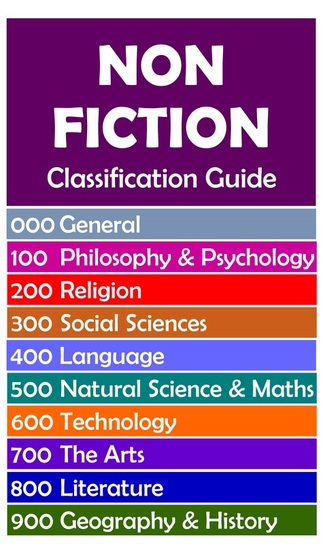
First, all non-fiction is shelved by assigning broad topics to a numerical range from 0 to 900. This classification guide at right shows the ten classification categories. Inside a sequence, similar subtopics are shelved together, using more decimals and letters as you get more specific.
Let’s look at history as an example. History and Geography are all assigned within the 900-999.99 numerical sequence. Any true (nonfiction) book about historical topics will be shelved inside these numbers. Within the 900 sequence, you find subdivisions like geography and travel (910), biographies (920), European history (940), etc. The chart below, from the website LibraryThing, gives you an easy visual representation of this breakdown.
So if I were looking for a book about the American Civil War, I am able to browse everything our library has about the war in the 970-979 sequence. If I wanted to read about Chinese history, I would browse through the 950-959 sequence. Is it making sense yet?
We have some handy charts inside the library to remind you how the classification system works. If you’re a browser, don’t be discouraged. Reference the chart, look up a keyword in the catalog for a starting point, or ask one of our friendly library staff, “Where can I find books about whales?” Whichever way you use, with the broad shelves of nonfiction to choose from, you’ll have no trouble finding something that interests you.
Pumpkin spice is so over. It’s time for gingerbread, in preparation for this year’s #GingerbreadMadness. This year, you can win bragging rights and a prize for the best decorated gingerbread house. Keep reading to find out more.
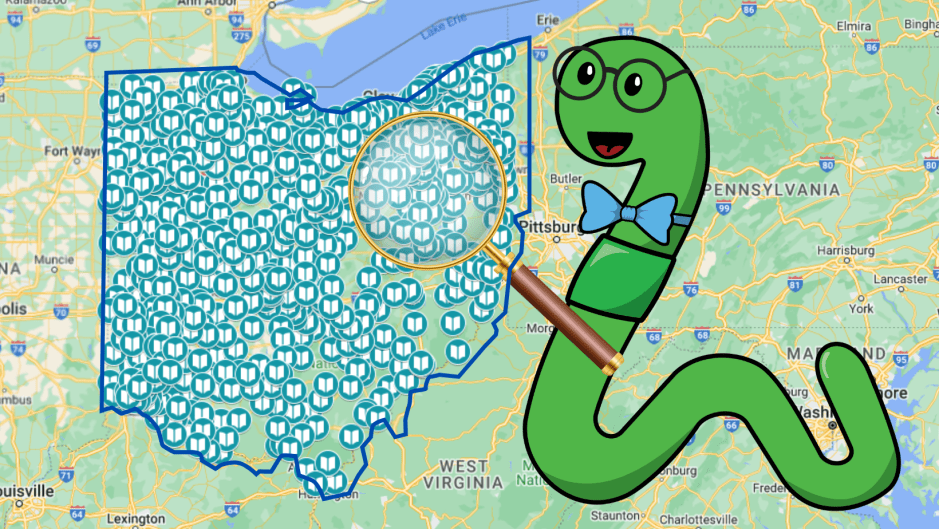
Did you know that with your library card, you have free access to over 16 million books, audiobooks, movies, and music from public libraries across the state? This borrowing magic happens through a service called SearchOhio. Did you know that SearchOhio will deliver the item you borrow from Dayton, Cincinnati, Lima, or wherever, here to RML at no cost? If you don’t know, keep reading to find out how it works.
It’s time to get dressed up in your favorite book-inspired costume and join us for our annual fun-for-all-ages Halloween party. Why should you come? You’ll miss all the fun if you stay home!
In our year-long Bookworm Challenge, October is, of course, the month to get a taste of the horror genre. For your reading pleasure, we present a list that spans the barely-scary “cozy horror” to books you should read only during the daytime with all the lights on. We developed a ghost-rating system to make it simple.
A few weeks ago, we shared some free resources that can help you and your students with homework. Most of that post focused on helping younger students. “What about helping my middle and high schoolers,” you ask? “They have research papers, term papers, reports and presentations that can be pretty tough to complete.” We agree, and we have some help for your older students, too. Best of all, it’s available anytime and it’s all free.
Did you eat a warm, juicy tomato from your garden this summer, only seconds after picking it? How many zucchini did you get from that plant you grew and tended all summer long? Are your cucumbers still going strong, even as the weather cools?
We hope your garden harvest was amazing but remember that it’s more than the fruit and vegetables, it’s also the seeds. Each seed that you save can grow into its own plant and feed you again next year. In one tomato, there are an average of 150 to 300 seeds. You could save the seeds from just one tomato and have way more than you and your neighbor need for next year.
We launched our Reed Seed Library in Spring and distributed a lot of seeds. As you close down the gardening season, think about saving seeds for next year – for yourself and to donate back to our seed library.
Pollination primer
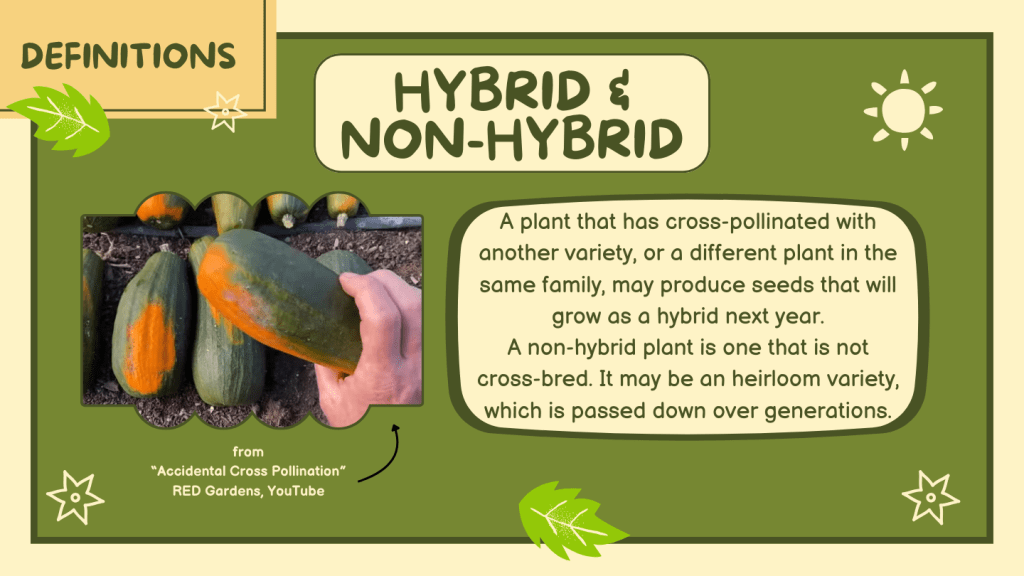
Before you save seeds, you’ll need to know if your seeds will be true-to-type. In its simplest terms, will your seeds produce the exact same plant next year? This all depends on pollination.
Some plants like tomatoes, peas, and beans are self-pollinators and will generally produce the same seed. Wind and insect-pollinated plants like squash, cucumbers, corn, and melons, are more likely to cross-pollinate unless you’ve taken precautions beforehand. If your plant cross-pollinates, the resulting seed will be a hybrid – a combination of both plants’ characteristics. A hybrid isn’t a bad plant, it’s just not the original. Don’t let the worries about cross pollination keep you from saving and donating your seeds. Those hybrid vegetables will still feed the family and taste amazing.
Harvesting seeds
It’s a little different for each plant but harvesting your seeds is not difficult. Your garden crops (and their seeds) will either be dry-fruited or wet fruited. Example: Beans are dry fruit. If you leave a few green beans on the vine, in time the pods will mature, dry out and do most of the work for you. Collecting those seeds will be as easy as picking some of the mature, nearly dry pods and bringing them inside for further drying and cleaning.
Tomatoes are wet fruited. To harvest those seeds, you need to cut apart the ripe fruit and extract seeds from the flesh and pulp before drying them. When you are harvesting any seed, the most important thing is to make sure your final seeds are dried properly. Wet and mold are your enemies.
We’ve just skimmed the surface of pollination and seed saving. If you’d like to dive deeper into these subjects, we have some books to help, so stop in. You can also check out these great resources below.
https://howtosaveseeds.com detailed information on some specific plants, general germinating, planting and gardening information as well.
Seed Savers Exchange has been saving and sharing seed and information with gardeners since 1975. Their website has loads of helpful information and if you want to dive deep into seed saving, this is the place to go.
Right here in Portage County, we have an amazing resource with the OSU Extension Office. You can “Ask a Master Gardener” your outdoor plant questions right from their website. If you’ve caught the gardening bug, you can also dig into details on getting that Master Gardener designation for yourself.
I’ve saved my seed. How do I donate to the seed library?
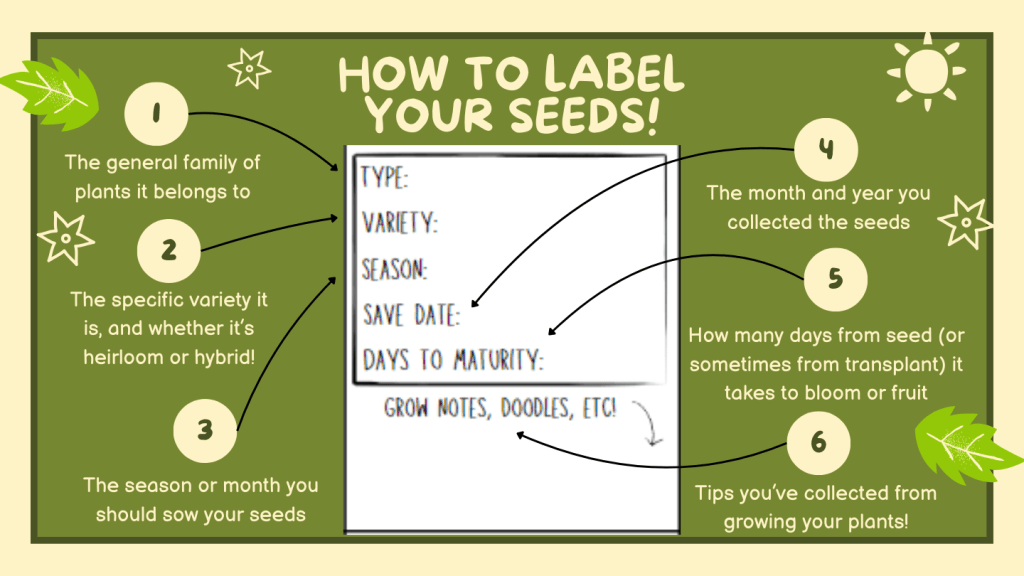
The most important thing to remember is to make sure and label your donated seed properly, as in the illustration below. Then we can correctly file your seeds into the library.
If you’d like to package your seed in our handy, labeled folding packet, stop by the second-floor desk and pick some up or download and print them yourself. Once your seeds are dried, labeled, and packaged, bring them back to our staff at the second-floor desk.
Our seed library’s inaugural year was fantastic. With your help, we hope to make it even better next year.
Did you grow anything using seed from the library this summer? What was your best crop?
Why Realistic Fiction? Because it’s the genre that brings you stories so ordinary, you could be living them (except maybe with wittier dialogue and slightly better lighting). But like reality TV, reading about real life might not be as dull as you think it is.
In our year-long Bookworm Challenge, September is the month for realistic fiction. If you’re scratching your head about the genre, we’re here to help. While the challenge prompts may give you room to squeak through with another type of read, we encourage you to give it a try.
School is about to start and with it comes something dreaded by students, parents, and caregivers alike: homework. With some helpful, free tools that you can access at home, we can make it a little easier.



 Sincerely, Cornelius